
Bismatic perspective | May 25, 2026
This article focuses on the product itself. Many Chinese export factories have precise equipment, stable processes and serious production capacity, but those strengths are not visible in the product appearance. As a result, capable products are treated like low-price white-label goods, lose margin and miss higher-value orders.
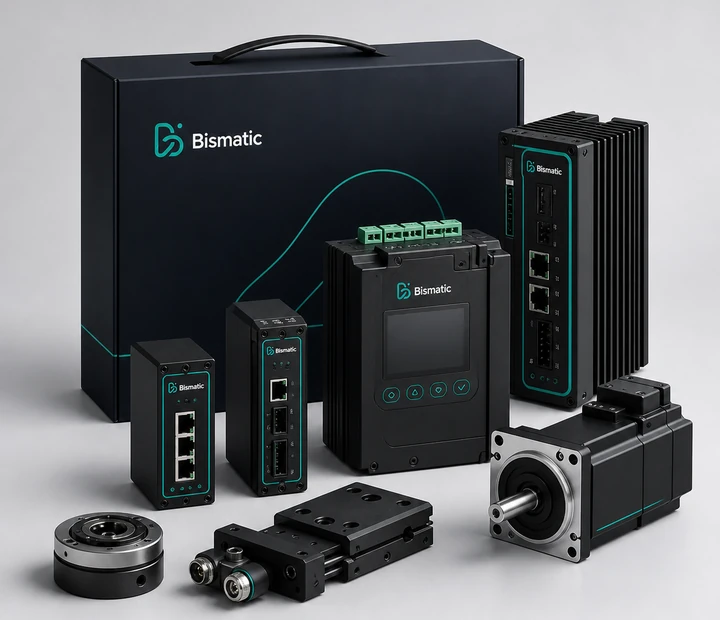
Industrial product styling is not cosmetic decoration. It is the work of making structure, surface treatment, assembly precision, family consistency and functional logic visible. For a manufacturer, the product is often the first factory audit document a buyer sees.
The B2B purchasing truth: visual judgment comes before parameter proof
Many small and mid-sized manufacturers believe that better parameters, accurate equipment and complete certificates should be enough to win premium overseas orders. In industrial B2B purchasing, the sequence is usually different. Buyers, engineers and audit teams often make an initial judgment from product appearance, assembly details and surface finish before they verify performance through reports, certifications and trial production.
This is a risk-screening mechanism. Before a site visit or a bulk trial, buyers can only judge from visible evidence. Sharp lines, clean parting lines, controlled edges, consistent colours, even gaps and stable coating quality all affect the first evaluation.
Many factories have advanced CNC equipment, automated lines, mature injection moulding, sheet metal or coating processes, and experience supplying international clients. Yet the final product may still look dated, rough or inconsistent. Performance may be at a mid-to-high level, but visible flaws can cause the buyer to classify it as low-end, non-standard or weak in quality control.
Industrial appearance is therefore not an aesthetic extra. It is a visible carrier of manufacturing process, quality control and standardised production ability.
Why engineers include product details in evaluation
Consumer purchases may be driven by beauty, trend and mood. Industrial purchasing is driven by stability, consistency and controllability. Experienced engineers can read a product's development logic, production process and management level from its details.
Clean lines and ordered structural zones suggest a mature development system. They show that the product was designed for ergonomics, installation space and real working conditions rather than copied superficially.
Even surface treatment, clean edges and the absence of burrs, paint build-up or tool marks suggest standardised finishing, inspection and process discipline. Repeated visible defects suggest loose inspection standards and unstable batch quality.
A unified design language across a product family indicates stable tooling parameters, process standards and production SOPs. This matters greatly for overseas bulk procurement, where buyers need repeatability across thousands of units.
Intuitive functional form also matters. If the buyer can quickly understand installation, maintenance and application scenarios, communication becomes easier and the product feels more credible.
In industrial trade, unprofessional details often imply weak process control. Weak process control implies higher batch delivery risk.
Professional upgrading: industrial credibility before visual beauty
A common mistake is applying consumer-style aesthetics to industrial products: fashionable minimalism, decorative luxury, complex curves or unnecessary surface styling. These may look good in a rendering but fail in real working environments. Industrial products must first satisfy safety, durability, maintainability, working-condition fit and manufacturability.
Bismatic's logic is order, standardisation and functional visibility. Before designing, we define the channel and use case: project procurement, retail terminal, high-end custom integration or cross-border distribution. We also clarify the price level and market position.
Then we study overseas competitors and identify the factory's real process advantages. Is the selling point precision, durability, compatibility or custom capability? Each answer requires a different styling strategy.
Precision instruments and small control devices should communicate order, accuracy and stability. Standard mechanical parts should emphasise consistency and repeatable mass production. Large equipment should express strength, safety hierarchy and structural confidence. Household industrial tools and hardware should combine simple use with durable texture.
A successful upgrade is not a single attractive rendering. It lets buyers understand the function and process advantage within seconds, helps sales explain value without heavy wording, and can be produced reliably with the factory's existing equipment and process base.
Five factory capabilities hidden in product appearance
Overseas buyers may not state every evaluation rule, but during sample review, showroom visits and exhibition meetings they constantly read product appearance as evidence.
First, category depth. Form, structure and installation logic show whether the factory understands real overseas working conditions or is simply following a trend.
Second, technical and process reliability. Mechanical structure, assembly details, surface treatment and parting line control show whether the product has been engineered, tested and refined.
Third, stable mass production. A unified product family suggests tooling management, SOPs and quality inspection that can support consistency across large batches.
Fourth, efficient commercial communication. When product functions and advantages are visible, buyers need fewer explanations and can confirm fit faster.
Fifth, long-term cooperation confidence. A disciplined industrial appearance suggests lower repair risk, more predictable after-sales cost and a better basis for long-term supply.
Three ineffective upgrade traps
The first trap is a fragmented product family. New models, old models, custom versions and best-sellers often use different corner treatments, colours, logo positions and proportions. Buyers may read this as unmanaged development, tooling and production standards.
The second trap is the wrong kind of beauty. Industrial products must be durable, easy to clean, easy to repair and resistant to corrosion or wear. Decorative structures can collect dust, break easily and increase maintenance cost. Engineers quickly notice when styling ignores the working environment.
The third trap is surface renewal without functional or process visibility. Changing shape and colour is not enough if the design does not express better precision, improved material, structural optimisation or efficiency. A product may look newer but still fail to justify a premium.
Bismatic's industrial product upgrade system
Bismatic does not simply refresh renderings. Our work is built around commercial application, process visibility and mass-production standards.
First, we diagnose the whole product family. We check surface flaws, assembly gaps, parting lines, edge treatment, colour inconsistency and unclear functional expression, then compare the product with stronger overseas competitors.
Second, we define market and competitor positioning. We study overseas working conditions, visual expectations and competitor weaknesses, then identify the manufacturer's own process advantages and design language.
Third, we create production-ready standards: appearance rules, colour systems, edge requirements, surface treatment details and logo placement guidelines. These must fit the factory's moulds, injection, sheet metal, coating and assembly reality.
Fourth, we unify the product series so appearance, process and value expression support one another. The goal is not merely a better-looking product. The goal is to make automation capacity, precision process, strict quality control and stable mass production visible through the product itself.
Core conclusion
The high-end feel of industrial products does not come from decoration or dramatic shapes. It comes from design order, process precision, production standards and functional logic working together.
For export manufacturers, product appearance upgrading can be one of the most direct ways to turn hidden capability into market trust. In categories where performance, parameters and capacity are increasingly similar, the manufacturer that makes process quality visible has a better chance of escaping price competition and entering higher-value overseas buyer lists.